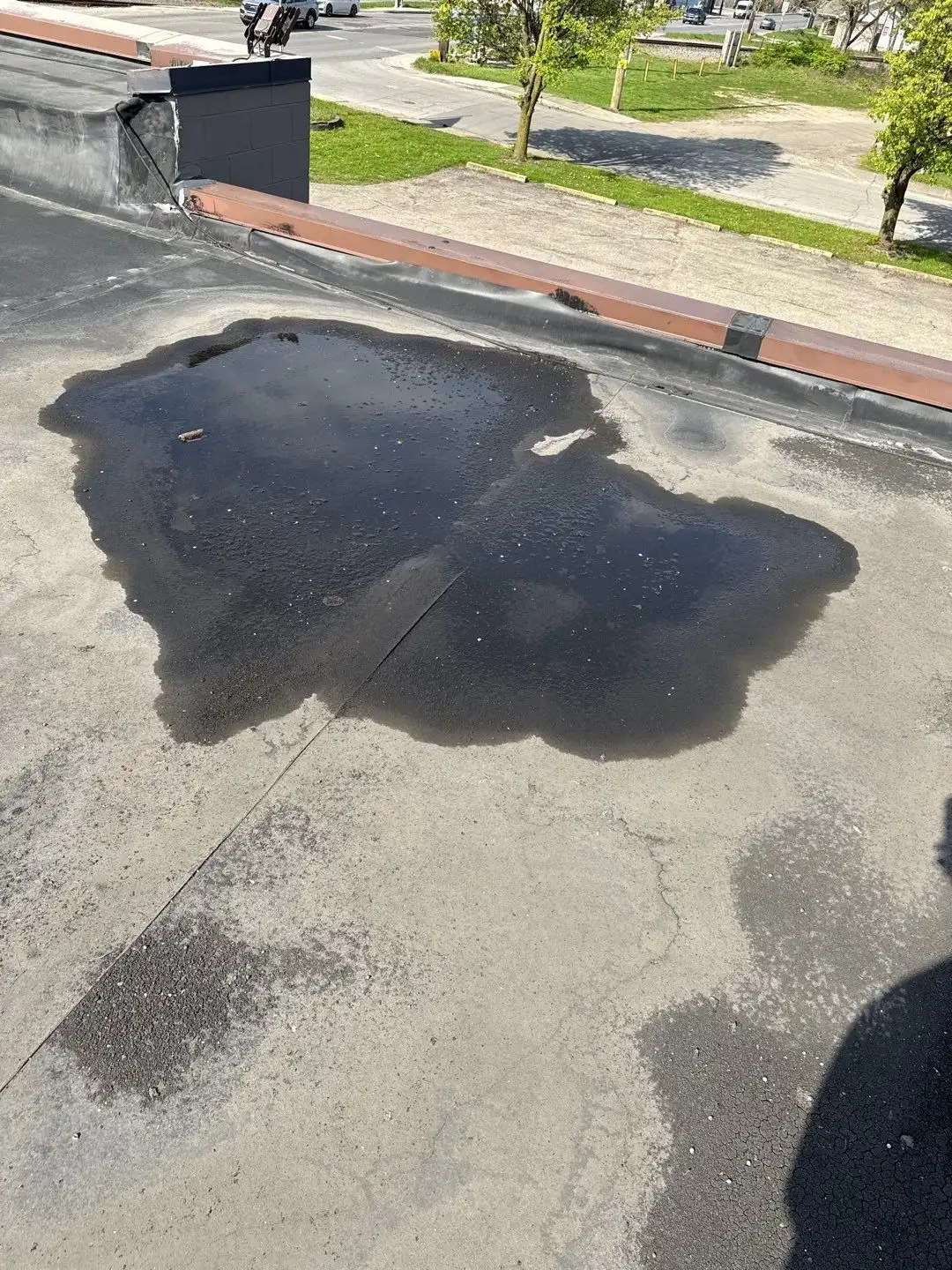
What Actually Happens in the First Phone Call
When you reach Schererville Commercial Roofing about an active commercial roof leak in Schererville, the conversation does not start with scheduling. It starts with questions designed to gauge severity and protect what you have. Is water still entering the building right now, or has it slowed since the rain stopped? How many floors are affected, and is the water reaching electrical panels, server equipment, or finished goods? Is anyone in the building, and is the ceiling sagging or holding? Those answers tell us whether to dispatch a tarping crew immediately, schedule a daylight inspection, or, in the rare case where the situation is beyond what a roofer can address safely (active structural collapse, for example), redirect you to the right resource. We would rather lose the job than send a crew into a situation that needs the fire department first.
The phone triage also covers practical logistics that save hours once a crew arrives. We ask about roof access, whether there is an interior hatch or an exterior ladder point, what the parking situation looks like for a service truck, and whether any rooftop equipment (HVAC units, satellite dishes, solar arrays) might complicate movement on the membrane. If your building sits in a property with restricted hours or a security desk, we coordinate that ahead of time so the crew is not standing at a locked gate while water continues to enter. Property managers in Schererville often handle multiple buildings, so we also confirm the exact address, suite, and any contact who will meet the crew on site.
Once a crew is rolling, your job shifts to interior protection. Move what you can away from the active drip zones, get tarps or plastic over inventory and equipment, and start photographing everything. Those photos become the spine of your insurance claim later. If interior water has already saturated drywall, carpet, or ceiling tile, the roof repair and the interior dry out are two parallel projects, and we often coordinate with the team handling commercial water damage restoration and business recovery so neither workstream blocks the other. The faster the interior dries, the less likely you are to deal with secondary mold growth in wall cavities or under flooring two weeks later, when the building is supposed to be back to normal operations.
Temporary Dry-In Versus Permanent Repair
One of the most common misunderstandings in emergency commercial roofing is the assumption that the crew arriving in the rain is going to perform the permanent fix. They are not, and you would not want them to. Wet substrate, active weather, and limited light all conspire against any repair that needs to last. The goal of the emergency visit is dry in: stopping water entry with mechanically fastened tarps, peel and stick membrane patches, sealant at flashings, or shrink wrap over damaged sections of TPO, EPDM, or modified bitumen. That buys you a dry building and gives us a stable surface to inspect properly once conditions allow.
The permanent repair conversation happens after the dry in holds and we can walk the roof in daylight. That is when we identify whether you are looking at a localized seam failure, a punctured membrane, a failed pipe boot, blocked drains that ponded water until the system gave up, or a roof that has reached the end of its service life and needs replacement planning rather than another patch. We document what we find with photos and notes, and we hand you a written scope before any permanent work is scheduled. For ongoing risk assessment, a scheduled commercial roof inspection twice a year catches most of the failures that turn into emergency calls.
It is worth understanding why a quality dry in is not a permanent repair, even when it looks watertight from the ground. Tarps and emergency patches are designed to shed water under pressure, but they are not insured to the membrane the way a heat welded seam or a fully adhered patch would be. Wind uplift, foot traffic from rooftop service techs, and ultraviolet exposure all degrade emergency materials within weeks to months. Treating a dry in as if it were permanent is one of the most common ways a small leak turns into a saturated insulation board the following season, which is a far more expensive problem to solve.
Cost Ranges You Can Plan Around
Emergency commercial roof work in Schererville carries a premium over scheduled work, and you deserve to understand why before the invoice arrives. After hours mobilization, weather risk, and the specialty materials used for dry in all push the cost above a daylight repair. Here is how the typical ranges break down for a single story commercial building under 20,000 square feet:
These numbers move with material choice, deck condition under the membrane, and how much insulation has to come out because it absorbed water. A TPO repair on a clean substrate is on the low end. A built up roof with saturated iso board underneath, where we have to cut, dry, and re flash, climbs quickly. We give you the range honestly, in writing, before work proceeds, and we explain which decisions sit with you versus which ones the building code makes for you.
Documentation That Protects Your Claim
Most commercial policies cover sudden and accidental water entry but exclude long term wear, neglected maintenance, or damage from clogged drains the owner knew about. That distinction is where claims succeed or fail, and the documentation your roofer creates in the first 48 hours matters more than most people realize. We photograph the failure point, the interior damage path, weather data from the day of the loss, and the condition of drains and flashings nearby. That packet, combined with your interior photos and any inspection history, gives your adjuster a clean story to work from. If you have never filed a claim like this before, the broader process for filing a water damage insurance claim walks through the same documentation discipline applied to your situation.
One detail that surprises many Schererville business owners is how much weight adjusters place on a roof's maintenance history. If you can produce inspection reports from the previous year or two, receipts for prior minor repairs, and photographs showing drains were kept clear, the conversation shifts from whether the loss is covered to how quickly the claim can close. That is why Schererville Commercial Roofing keeps a copy of every report and invoice on file, available to you on request. Even if the current emergency is the first time we have worked on your building, we start that documentation trail with this visit, so the next storm finds you in a stronger position than this one did.