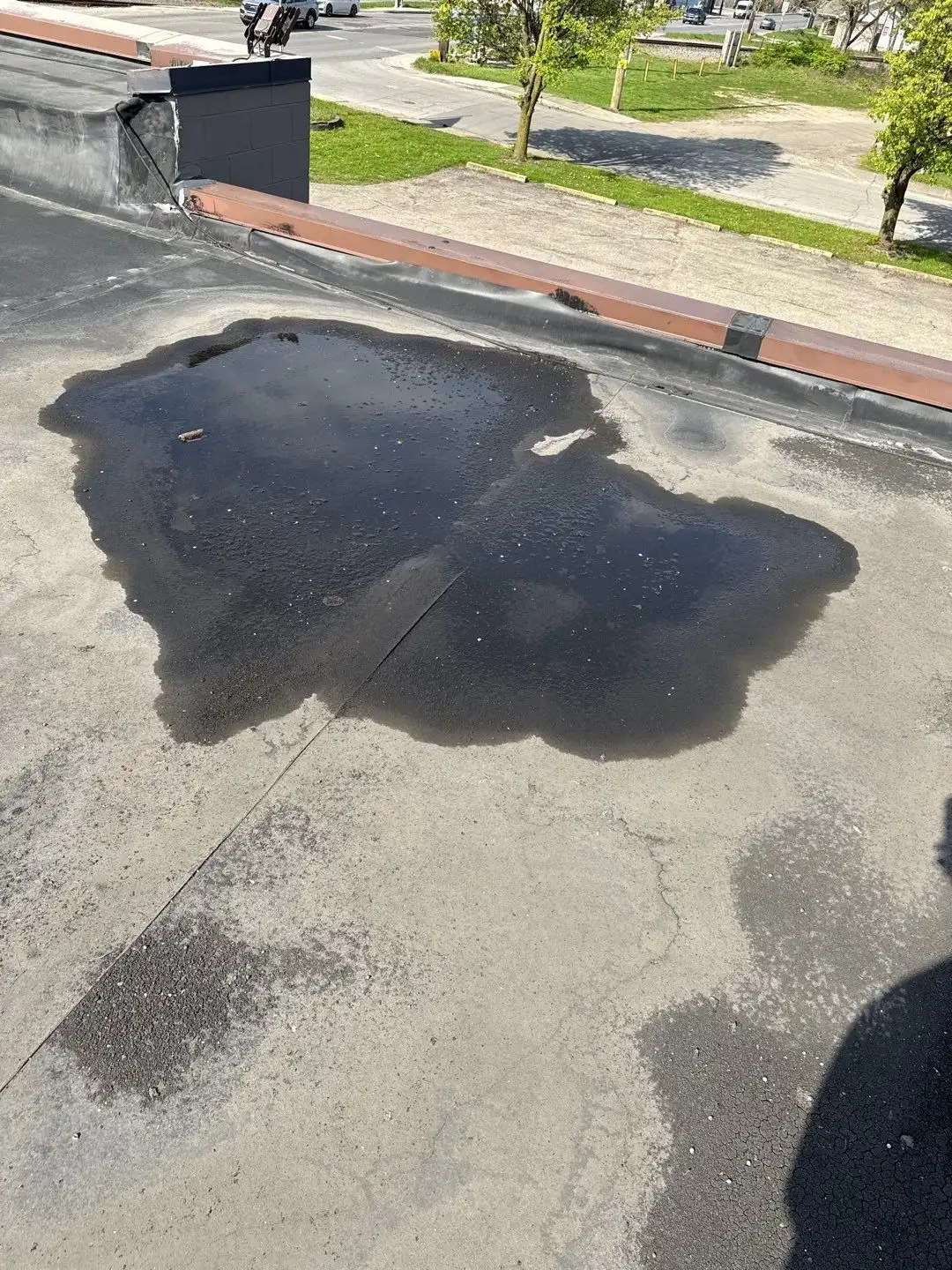
Why do flat roofs leak in the first place?
Flat roofs are not truly flat. They are built with a slight slope, usually a quarter inch per foot, to push water toward drains and scuppers. When that drainage path fails, water ponds. Ponded water finds every weak seam, fastener back out, and pinhole the membrane has, and pressure does the rest. In Schererville, the most common leak sources we document are failed seams at membrane overlaps, cracked flashing around HVAC curbs and vent pipes, split laps on modified bitumen near parapet walls, and clogged interior drains that let water sit for days after a storm.
Age is a factor too. A TPO roof installed fifteen years ago has lost much of its plasticizer and gets brittle. EPDM shrinks over time and pulls flashings tight at the corners. Built up roofs lose their gravel ballast and the asphalt below oxidizes. None of this is sudden, which is why a yearly look at your roof catches problems before they reach your ceiling.
Foot traffic is another factor people forget about. HVAC technicians, satellite installers, and window washers all walk on flat roofs, and every footstep on a hot summer afternoon presses grit into a softened membrane. Over years, those traffic paths thin the top ply and create tiny stress fractures right where service personnel access rooftop equipment. Walk pads help, but few buildings have them installed where they are actually needed.
How do you actually find the leak?
Tracing a flat roof leak takes more than a visual walk. We start with a conversation: when did you first see water, where is it showing inside, and what was the weather doing? That narrows the search radius. Then we go up top and look at the obvious suspects, which are penetrations, seams, drains, and parapet terminations within roughly fifteen feet of the interior stain.
If the visual inspection is inconclusive, we move to instruments. Infrared scanning, similar to what is described in moisture mapping with thermal imaging, shows where wet insulation is hiding under the membrane because saturated areas hold heat differently than dry ones. A moisture meter confirms readings at specific spots. For tougher cases, electronic leak detection uses a low voltage charge across the membrane to pinpoint breaches the eye cannot see. The goal is always the same: confirm the entry point before we cut, not after.
One thing worth knowing about flat roof leaks: water rarely drips straight down from the breach. It can travel ten, twenty, even forty feet along the top of the deck or between insulation boards before it finds a fastener hole, a seam in the vapor barrier, or a low spot to enter the interior. That is why a leak showing up over the conference room may actually originate near a rooftop unit on the other side of the building. Skipping the diagnostic step and patching the closest visible defect is how people end up paying twice.
What about commercial properties with bigger roofs?
Commercial flat roofs follow the same diagnostic logic but at larger scale. We handle commercial roof repair for warehouses, retail strips, and office buildings across Schererville, and the conversation usually starts with whether the budget is for repair, restoration, or replacement. Roof condition reports, core samples, and infrared scans give the property manager the information needed to make that call without guessing.
How long does the actual repair take?
A straightforward patch on a dry day is a few hours of work. Larger repairs that involve cutting out wet insulation, replacing deck sections, and reflashing penetrations typically run one to two days. Weather drives everything. Most membrane systems require a dry, cured substrate, so we will not rush a repair into wet conditions just to say it is done. A bad patch installed in the rain leaks again in a month.
What if water is already inside the building?
If you have active drips, ceiling sag, or wet drywall, the roof and the interior are two separate problems that have to be handled in parallel. Tarping or temporary dry in stops the water from getting worse while the interior dries. Wet insulation in the ceiling cavity, soaked drywall, and damp framing all need attention or you will be dealing with mold within days. Our team coordinates the rooftop work with interior response, and you can read more about that process in our guide to attic water damage from roof leaks. For active leaks during business hours we prioritize tarping and dry in. Severity is assessed over the phone so the right crew shows up with the right materials.
What does flat roof leak repair typically cost?
Costs vary with membrane type, access, and how much wet insulation has to come out. A simple seam reseal or pipe boot replacement is usually a few hundred dollars. A larger patch that requires removing saturated insulation and replacing a section of deck climbs quickly. The chart below reflects what we see across Schererville jobs in a typical year.
Can a flat roof be patched, or does it need replacement?
Most leaks are repairable. The question is whether repair makes financial sense given the roof's age and overall condition. A general rule we use: if the membrane is under fifteen years old and the wet area is under ten percent of the roof, a targeted repair is the right call. If multiple leaks are appearing across the field, if insulation is saturated in several zones, or if the membrane is cracking everywhere you press on it, you are spending good money on a roof near end of life.
A core sample tells us how much wet insulation is hiding. Two or three small cuts through the membrane, taken in suspect areas, reveal whether the problem is localized or widespread. We share what we find with photos so you can decide based on evidence, not pressure.
How do you keep a flat roof from leaking again?
Repair is one half of the job. Prevention is the other. Once we close out a leak, we walk the rest of the roof and flag anything that is likely to fail in the next year or two: open seams forming, sealant pulling away from termination bars, drain strainers missing, debris piled against curbs. A short punch list handled during the same visit costs a fraction of returning for another emergency.
For property owners and managers in Schererville who want to stay ahead of trouble, Schererville Commercial Roofing offers scheduled inspections in spring and fall. Clearing drains before leaf season, checking flashings after winter freeze thaw, and resealing pitch pans before they crack open are small jobs that protect a much larger investment. Documented inspections also matter for warranty compliance, since most manufacturers require evidence of routine maintenance to honor coverage. A binder of photos and notes is worth its weight when a claim comes up.